
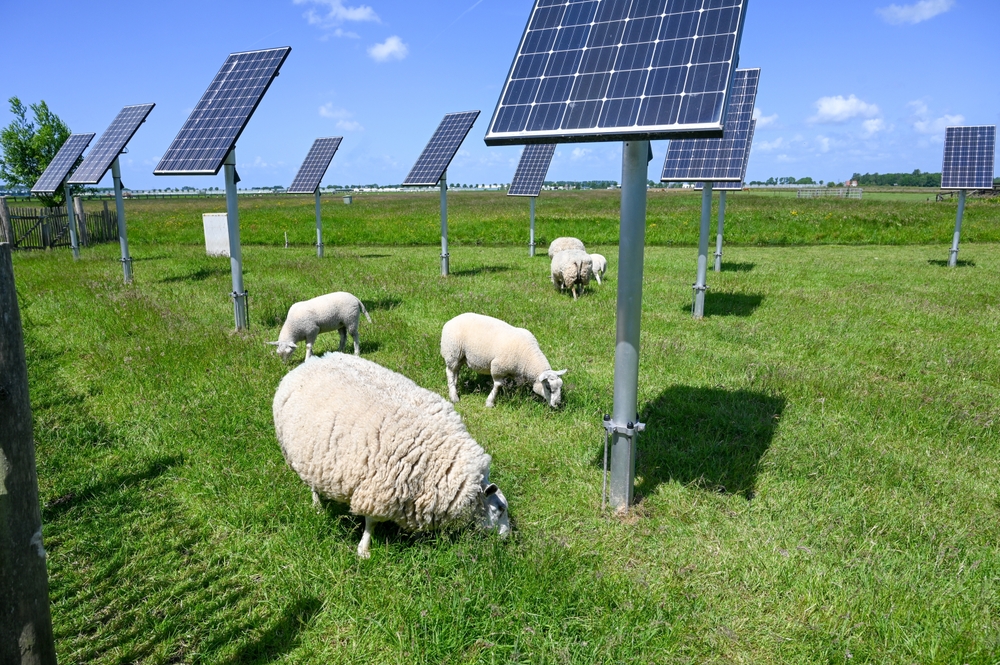
There’s a quiet shift happening across rural Texas.
Landowners in the Hill Country, ranch owners west of Fort Worth, and homesteaders in the Trans-Pecos are choosing to unplug; not just from city life, but from the grid entirely. Some were pushed there by the 2021 winter storm, watching neighbors go dark for days with no backup and no recourse. Others were simply tired of waiting years for a utility hookup that may never come, or paying rates that keep climbing with nothing to show for it.
Whatever the reason, more Texans are pursuing full energy independence. And it’s a worthy goal, but it’s not as simple as throwing up some panels and calling it done.
Going off-grid is a whole-system decision. It changes how your home generates, stores, uses, and recovers from adversity. Get it right, and you’ll have a property that runs reliably for decades without a utility bill. Get it wrong, and you’ll be running extension cords to a generator every February.
Our experts at Texas Solar Professional know a thing or two about getting our clients off the grid. Let’s explore what a real off-grid system requires, and the honest lifestyle shifts that come with it.
The Difference Between Solar and True Off-Grid
Most homes with solar panels are still very much connected to the grid. These grid-tied systems reduce your electricity bill, sometimes dramatically, but they have a fundamental limitation: when the grid goes down, so do you. There’s no stored energy, no fallback. The panels go dark along with everything else.
Hybrid systems take it a step further by adding battery storage, letting your home ride out short outages independently. But they still rely on the grid as their ultimate backup.
A true off-grid system is entirely different. There’s no utility connection, no fallback, and no bill. The downside? There is also no safety net.
Every watt your home consumes has to come from what you’ve generated and stored on your own property. That’s a real form of independence, but it demands a level of planning that grid-tied systems simply don’t require.
Getting the Sizing Right
More off-grid systems fail due to poor sizing than to bad equipment. This is where the math matters most.
With a grid-tied system, you can be a little loose with your estimates. If you use more than you generate, the grid makes up the difference. Off-grid systems have no such margin. You have to plan for the worst days, not the average ones.
The two numbers that drive your system design are peak load (how much power your home draws at once) and daily consumption, measured in kilowatt-hours. Your peak load determines what your inverter needs to handle. Your daily consumption determines how large your battery bank needs to be.
The Hardware That Makes It Work
Off-grid systems require different equipment than standard solar installations, and the distinction matters.
Charge Controllers
Charge controllers and off-grid inverters are the core of the system. Charge controllers manage the flow of power from your panels into your batteries. Off-grid inverters convert the stored energy into the AC electricity your home actually uses. Not all solar equipment is rated for off-grid use. That’s why it’s best to leave it to our professionals to check during a system design evaluation.
Battery Storage
For battery storage in Texas, we recommend Lithium Iron Phosphate (LFP) chemistry. These batteries handle heat better than other lithium formulations, carry a strong safety profile, and simply last longer. In a state where summer temperatures can push 110°F in attics and outbuildings, thermal stability isn’t a nice-to-have; it’s critical.
Generators
Even the best-designed system benefits from a generator backup, not as a primary source of power, but as a last resort during extended bad weather. Most homeowners run their generator a handful of times a year at most. But when you really need it, having one integrated into your system from the start is far cheaper than retrofitting one later.
Beating the Texas Heat Off-Grid
Cooling is the biggest challenge for off-grid living in Texas, and it’s the issue that sinks the most poorly designed systems.
A traditional central AC unit draws a large startup current and runs inefficiently when it cycles on and off to maintain the temperature. That pattern is brutal on battery banks. On a 105-degree August afternoon, a standard AC system can drain a battery bank faster than your panels can replenish it.
The solution is modern variable-speed HVAC equipment. Unlike traditional systems that run at full power until they hit the thermostat setpoint and shut off, variable-speed units ramp up and down continuously to match actual demand. They draw less power, run more consistently, and put far less stress on your battery system.
Monitoring and Maintenance on Rural Land
Off-grid systems don’t have a utility company watching them. That responsibility falls on the homeowner and on the installer who sets things up correctly from the start.
Remote monitoring is something we build into every system. Through cellular or satellite connections, you can see your battery state of charge, current production, and system health from your phone. Issues that would go unnoticed for days become visible in real time. In a remote location, that early warning capability is worth a lot.
Routine maintenance (cleaning panels, checking connections, reviewing battery health) isn’t glamorous, but it’s what keeps a well-designed system performing for twenty or thirty years. Skipping it is how a $60,000 investment turns into a $60,000 headache.
The Honest Lifestyle Shift
Living off-grid changes your relationship with energy. Not in a dramatic way, but in a real one. You become more aware of what you’re running, when you’re running it, and what it costs your system. You start thinking about whether it makes sense to run the dishwasher at midnight or on a sunny afternoon. You notice when you’ve left a shop light on.
For a lot of people, that awareness is part of the appeal. It’s tangible. You can see your energy production, storage levels, and consumption in a way that a monthly utility bill never does. You’re not just paying a number now, you’re managing a system.
Is Off-Grid Right for You?
Not every property needs a fully off-grid system. If you’re building a rural home where a utility connection is expensive but possible, a hybrid system with substantial battery storage might give you most of the independence you’re looking for with more flexibility. If you’re miles from the nearest line and years from the nearest realistic hookup, off-grid isn’t just appealing, it’s probably the only practical option.
The key in either case is designing the system correctly before a single panel goes up. That means honest load calculations, components matched to each other and to your climate, HVAC equipment that works with your storage rather than against it, and a backup plan that can carry you through the worst week of Texas weather.
This is not a DIY project. It’s a full energy system design, and the decisions made early are very hard to undo later.
Working with Texas Solar Professionals makes going off-grid easy
At Texas Solar Professional, we design and install complete off-grid and hybrid systems across rural Texas, from initial site assessment and load analysis through solar installation, battery storage, HVAC integration, and long-term monitoring.
If you’re considering energy independence for your property, we’d be glad to start with a conversation about what your land, your usage, and your goals actually require.