
Step outside your home on a hot afternoon in July. Does the idea of cranking up your heat sound appealing when it’s 105 degrees Fahrenheit outside in Arlington or Frisco? If you answered yes, you might live here. When temps soar this high, every interaction you have with your house relates to one solitary topic: your air conditioner. Because of our strong relationship with AC, the heat pump gets tossed aside by most homeowners. There is this idea that heat pumps are just meant for snowy winters up north and simply cannot keep up here in the Texas summers.
To understand why homeowners are skipping over one of the most efficient heating/cooling solutions available, we have to talk about language: the name “heat pump.”
People who live in Dallas and Fort Worth don’t want to spend their summer investing in a bulky metal box whose entire purpose is to… pump heat? Welcome to Texas. The concept is grotesque. The good news is, the technology works way differently than your assumptions.
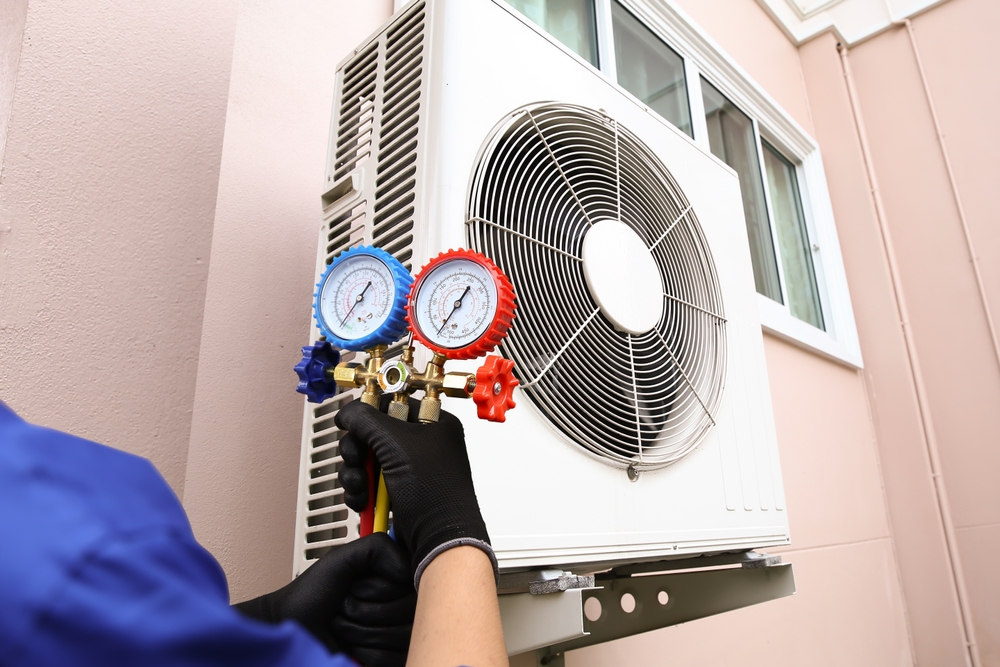
Think about your air conditioner like you would any other central cooling system. It doesn’t create cold air; it uses chemical refrigerant to absorb heat from inside your home and expel it outdoors. During the summer months, a heat pump does absolutely nothing different than your current air conditioner. Heat pumps use the exact same mechanical refrigeration cycle to suck hot air out of your living room and blow cool air in its place. The magical difference is housed in a small component called a reversing valve. This valve allows the machinery to literally “reverse” when those freezing temperatures eventually do arrive.
Swap out your furnace for a quality heat pump, and you now own one of the most versatile units for whole-home upgrades.
Myth 1 | Heat Pumps Can’t Keep Up with 100+ Degree Days
“How will it perform when it’s over 100 degrees outside?” is something we always hear when discussing heat pump advantages with suburban homeowners. If your system is designed to output heat, how will it possibly keep your home cool when it feels like an actual oven outside? Wrong again. This urban legend stems from decades-old, single-stage models and fails to account for recent innovations in residential cooling technology.
The secret sauce is something called an inverter-driven compressor. Legacy air conditioners operate in a very binary manner. They are either blasting at 100 percent capacity or completely off. When your thermostat detects your home needs cooling, that old compressor will kick on full blast, run until your indoor climate reaches your desired temperature, and shut itself off completely. This on/off pattern creates huge spikes in energy use, causes hot and cold rooms, and puts significant strain on your equipment.
An inverter compressor is much closer to a smart dimmer switch than your parents’ old thermostat. Once it turns on, it stays on. Inverter compressors can ramp their speed up or down in one-percent increments to precisely match your cooling demand at that moment. So if it’s 108 degrees in the Plano sun, your inverter system smoothly ramps up to its max cooling capacity. Not only does it run at much cooler internal temperatures, but because it’s designed to run longer on summer days—pulling more humidity out of the air — it utilizes advanced refrigerants like R-32, which absorb and reject heat many times more efficiently than older air conditioning formulas. It’s almost effortless.
Your equipment’s SEER rating isn’t going to tell you everything you need to know. Inverter technology is responsible for smoothing out that power draw and allowing your system to run long enough to actually do its job.
Traditional air conditioners suck hot air from your house, cool it down, and send it back out into your home. And while that cooled air may feel wonderful for a minute or two, the cycling process causes dramatic temperature swings and doesn’t adequately remove moisture from the air. Because inverter systems run longer at a lower speed, they actually eliminate humidity far more effectively than their frosty cousin. Your home won’t feel like a constant battle between freezing and sweaty. Oh, and it’ll keep your house significantly cooler when it matters most.
This is why HVAC replacement Texas homeowners trust us to install high-performance systems year after year.
Myth 2 | Heat Pumps Are Too Expensive to Operate
The thought of giant, electricity-gobbling heating coils operating in your attic sounds painful. Unfortunately, that’s what most people envision when you mention going off-grid from natural gas. They’re picturing electric resistance strips: little pieces of metal wire that get red-hot inside their air ducts to create warmth. This antique heating method was used in most electric furnaces for decades — and for good reason. It simply runs your electric bill through the roof.
Heat pumps work from a polar opposite philosophy. Because they aren’t creating thermal energy, they can operate at truly insane levels of efficiency. It’s not uncommon to see SEER ratings over 300 percent. Need some clarity on that number? That means your system is putting out 3 units of heating energy for every 1 unit of electricity it consumes.
Do the math on how much your household spends on traditional electric strip heating, and you’ll quickly understand why replacing your old furnace with an advanced Daikin HVAC system can save you up to 70 percent on winter utility costs. These numbers stay competitive even when you factor in natural gas because heat pumps eliminate wasted energy like pilot lights and gas line fees.
Say goodbye to crippling summer and winter spikes.
Investing in the right technology could even help lower your energy bill during peak grid usage. July and August are notoriously brutal on the Texas power grid. Millions of compressors across the state turn on simultaneously, causing demand to spike to astronomical levels. With continuous operation and a much smaller power draw during colder months, inverter technology helps level out seasonal demand..
Instead of seeing massive jumps in your electric bill every July and February, your usage flattens out to a consistent amount you can actually budget for. It’s the closest thing we have to price stabilization.
The Perfect Marriage: Heat Pumps + Solar Energy
If there is one upgrade you should do to permanently lower your electricity bill, it’s your HVAC system. Heating and cooling account for more electricity consumption than your TV, dishwasher, refrigerator, water heater, and EV combined. In fact, many Texas homeowners report that HVAC systems make up over half of their annual energy expenses.
Unfortunately for homeowners in a solar tax credit-starved world, picking the wrong system could price you out of going solar entirely.
You might need a bigger solar array and battery backup system just to cover your HVAC energy needs. By spending a little extra on a premium unit now, you could save yourself money and space on that custom rooftop solar system.
By making the switch to a state-of-the-art HVAC system, you can start planning your solar installation today instead of waiting several years. Say goodbye to gas bills and hello to 100 percent solar-powered climate control.
There’s another subtle reason why solar panels and heat pumps work so well together: power draw.
If you’ve never owned a home with central air conditioning, you may not understand why it matters. Traditional air conditioners require a massive surge of juice—what’s known as locked rotor amps, or LRA — to start that compressor motor moving. When your AC first turns on, it can draw upwards of 100 amps for a few seconds. Your battery bank and inverter don’t know the difference between your fridge starting up and your AC—you’ve essentially told them to run full blast.
Since most advanced HVAC setups can start at 1 percent speed and slowly ramp up, you won’t experience that frightening surge of power on demand. Inverter compressors help your battery last longer and keep your home cool (or warm) when you need it most.
Choosing a System that Actually Suits Our Climate
Climate is everything here in North Texas. Too big and your heat pump loses efficiency during our miserable humidity. Too weak, and you’ll sweat through every freeze we experience. That’s why most of our customers come to us looking for the same brand time and time again.
Daikin HVAC units are engineered to withstand extreme outdoor temperatures while removing as much moisture from the air as possible. These units are built with heavier-duty materials and specialize in controlling humidity without losing cooling power.
We still install plenty of hybrid heating systems for homeowners who don’t want to cut the gas line completely. By supplementing a sleek heat pump with a small, high-efficiency furnace, you can take advantage of solar energy 95 percent of the year. Most dual-fuel systems are “smart” enough to measure operational cost on a dime and only use your gas furnace when it’s cheaper than running on electricity.
Just remember that if you do go with a hybrid model, your HVAC technician should always tune up your furnace at the start of winter. Failure to change your furnace filter and maintain those external coils can degrade operational efficiency by up to 30 percent.
Maintaining any system:
To get the most life and efficiency out of your new HVAC setup, there are some basic things you can do to prevent early wear and tear.
Sizing and Siting Tips
- Don’t oversize an inverter system — let it run low and slow.
- Double-check that your outdoor units will have plenty of airflow and aren’t tucked in next to a bush or undergrowth.
- Ask your installer to perform a duct test before installation.
Maintenance Tips
- Replace your air filters every few months. More if you have pets.
- Keep the external unit clear of grass clippings, leaves, and sediment.
- Schedule annual maintenance to ensure refrigerant levels are full.
Going Off the Grid with Texas Solar Professional
Going solar isn’t a DIY project and shouldn’t be treated as one. From Houston to San Antonio, there are dozens of fly-by-night installers taking your money while hanging you out to dry. We pride ourselves on providing a pleasant, stress-free experience with our clients.
Since day one, we’ve stuck to servicing Dallas-Fort Worth and the surrounding areas. We know our local climate. We understand what systems work and which installations don’t cut it. Our employees aren’t paid on commission, so we don’t sell you something you don’t need. We actually work for you.
Want to see your HVAC system running more efficiently? Our heat pump installations are carefully engineered to maximize your HVAC efficiency. Get started with a free consultation! Reach out today.
Frequently Asked Questions
Q. Will my heat pump cool my home adequately when it’s 110 degrees outside?
Yes! By utilizing efficient multi-stage compressors and higher-performance refrigerants, modern heat pumps can surpass your old AC’s capabilities during extreme weather.
Q. How much money can I save on my electric bill?
While it varies from home to home, you can expect to see electric reductions of up to 30 percent by upgrading to a variable-speed heat pump system.
Q. How are heat pumps better than traditional air conditioners for homes with solar panels/battery backups?
They don’t use extreme levels of power when starting up. By drawing a lower wattage, inverter systems won’t overload your battery during grid outages.