
Running a business in North Texas means dealing with the realities of our highly complex deregulated energy grid. Commercial real estate investors, facility managers, and business owners in Dallas, Fort Worth, Arlington, and Plano are constantly on the hunt to reduce their utility bills. All too often, electricity gets treated as a fixed overhead expense that is entirely out of the business owner’s control. Because electricity rates float so wildly on the ERCOT grid, businesses must pay any spikes in price that occur month to month. Not only does this make energy budgeting nearly impossible, but when summer rolls around, high commercial cooling requirements inflate peak demand charges on top of your NROI.
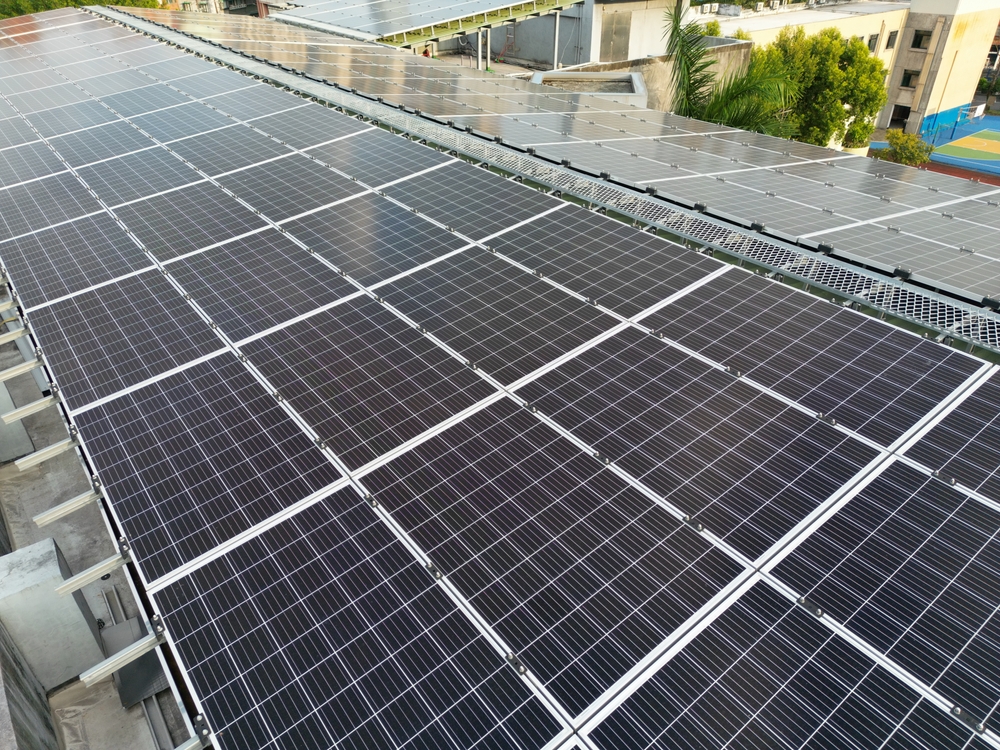
The easiest way to change this monthly headache into a tax-depreciated asset is to install commercial energy equipment. By investing in your own energy infrastructure, your business can literally pay-as-you-go to hedge against future energy price fluctuations on the grid. Installing commercial solar panels in Texas allows your business to generate electricity yourself, flipping the utility company from a completely-controlled entity to a completely-independent one.
As more and more companies look to expand their footprints in the Metroplex, we’ve seen commercial clients ask us how they can minimize costs on their facilities. After finding a quality solar company in Texas with deep local roots and expertise, the first step is to ensure your commercial array is engineered correctly for your facility’s high cooling loads.
The Return On Investment | Tax Breaks and ITC sweeteners
Solar doesn’t just save you money by lowering your monthly energy bill – there are large tax breaks at the federal level that allow businesses to drastically reduce the upfront costs of solar by filing for an Investment Tax Credit (ITC). A 30% tax credit based on the overall cost of your commercial solar system in Texas can be applied to your business’s Federal Taxes owed in year one.
In addition to the ITC, commercial entities can pair the Modified Accelerated Cost-Recovery System 100% tax depreciation with Section 179 deductions to accelerate the amount of assets they can deduct each year. Commercial-grade solar electric systems in Texas fall under a 5-year asset recovery period, allowing your company to take full advantage of your system’s cost early on in the life of the project.
Not only does this reduce your business’s fixed utility expenses (improving your EBITDA), but lowering your operating expenses also improves your property’s net operating income (NOI). This is especially useful for commercial property owners looking to improve the overall cap rate and valuation of their real estate investment.
Backup Energy | Battery Storage for Businesses
One of the biggest and most important benefits of commercial solar we see in North Texas is peace of mind during unexpected grid outages. No business wants to deal with the repercussions of being without power for an extended period of time. Lost productivity, data, profit, refrigerated goods; the list goes on.
For local retail campuses, medical offices, and manufacturing facilities, we’ve found that solar plus battery storage is the best option for keeping your facilities up and running. Unlike a traditional generator, solar plus storage will automatically dispatch from the grid during an outage.
- Without Battery Backup: Grid Failure → Mission Critical Downtime
- With Battery Backup: Grid Failure → Automatic Battery Dispatch
Commercial energy storage works alongside your solar array to ensure important circuit panels remain powered during an outage. Protecting things like servers, refrigeration, lights, and basic equipment allows your business to stay active during outages and meet customer commitments. Avoid lost revenue by keeping your operations online during utility brownouts.
Additionally, commercial battery storage allows you to take advantage of a cost-saving strategy known as peak shaving. In short, utility companies often charge businesses premium rates based on their highest “peak” of energy usage during peak hours. By dispatching power from your energy storage system during these hours, you can completely shave off these demand charges and flatten out your kWh consumption each month.
Commercial Roofing Considerations for Solar Texas
Before installing solar panels on your facility, it’s important to assess the current condition of your roof. Warehouses, big-box retail centers, and industrial facilities typically have flat roofs, which are ideal for maximizing your solar footprint. It’s crucial to have your roof inspected by a commercial roofer prior to solar installation to ensure your roof is in good working condition. There’s no reason to install solar and then have to rip it all off to replace a faulty roof.
Recommended Commercial Roof Upgrade Path:
- Commercial Roof Audit → 2. Repair/Replace Roof as Needed → 3. Install Solar Array
If your roof is nearing the end of its lifetime, you’re better off getting a roof replacement/reinforcement at the same time you install solar. Not only will this save on future labor costs of removing solar, but designing a solar-ready roof allows your contractor to integrate the racking, mountings, and seamless integration into your roof from day one.
Engineering and installing large-scale solar energy solutions in Texas is a massive undertaking that should only be handled by qualified commercial professionals. Commercial systems are sized much larger, run at higher voltages, and use a specialized ballasted racking system. Proper engineering ensures your flat roof or ballasted solar array can handle Texas weather without warping or otherwise damaging your facility’s structure.
Going Green | Solar for Brand Awareness & Value
We can’t talk about the benefits of going solar without mentioning how good it can look in your marketing materials. The general public, and consumers in particular, love to see brands taking actionable steps towards a more sustainable future. By installing commercial solar energy solutions in Texas, your business can begin branding itself as a sustainable organization that cares about its community and the environment.
Commercial Advantages
- Financial: Reduce Operating Expenses & Increase EBITDA
- Resilience: Safeguard Your Business From Outages & Demand Charges
- Brand Image: Improve your “Green” ESG Score & Local Recognition
Going solar also helps you meet your business’s ESG — or Environmental, Social, and Governance — goals. Many businesses have investors or partners who require that certain sustainability benchmarks be met. By installing solar, you can start checking these boxes and improving your company’s ESG score. For example, let’s say you own a low-slope commercial building in the DFW area that has been experiencing rising energy costs.
By installing a commercial-grade rooftop solar array, you could potentially eliminate up to 100% of your utility bill by offsetting your grid energy usage and dependence.
Commercial Solar Checklist for Facility Owners & Managers
- Collecting your last 12 months of utility bills (kWh, Peak Demand Charges)
- Inspection of your Roof Age, Condition, & Structural Capacity
- Meeting with your accountant to understand the ITC, Section 179, and MACRS
- Identifying circuits to protect during a power outage (server rooms, refrigeration, etc.)
- Working with a non-commissioned solar company to obtain local quotes.
Texas Solar Professional | Your Solar Cost Partner
One of the easiest ways to avoid rising grid prices and demand fees is to remove yourself from the grid entirely. By investing in commercial solar for your business, you can reduce your facilities’ overall energy cost, protect your investment from blackouts, and qualify for large tax breaks at the federal level. Take your business energy bill from an unpredictable cost center to a tax depreciable asset.
At Texas Solar Professional, we strive to provide Texas businesses with the highest quality energy independence options. Owner Ryan Wallace leads our team of certified installers to ensure your project is installed correctly the first time, every time. From comprehensive financial modeling to interconnecting with the utility, we handle every step in-house for your convenience. Give us a call or request a free custom quote for your business today!
Frequently Asked Questions
Q. How long will it take my commercial solar system to pay for itself?
For most commercial systems in Texas, you can expect full repayment within 5-7 years. This is accelerated by taking the ITC, along with MACRS depreciation, and avoiding peak demand charges each month.
Q. Will solar protect my business from ERCOT power outages?
Yes. When you pair your solar array with a commercial battery backup system, your facility will immediately “island” itself from the grid during an outage. All critical circuits will continue to power on as if nothing happened.
Q. How does commercial solar differ from residential?
Commercial systems are much larger, operate at higher voltages, and typically use ballasted racks on flat roofs. Commercial solar focuses heavily on the financials of a project like EBITDA, and can require custom-engineered racking designs.