
Your July electric bill just hit $580, and to make matters worse, your living room still feels like a sauna. You crank the thermostat down to 72°F, but the air inside remains heavy, sticky, and thoroughly uncomfortable. You are not alone. Most homeowners in Plano, Frisco, and Fort Worth blame the outdoor thermometer for their summer misery, but the real culprit is hiding in plain sight: indoor relative humidity. Traditional air conditioners are simply not built to handle the unique moisture loads of a North Texas summer, leaving families stuck with high energy bills and clammy indoor air.
The secret to true home comfort during a brutal Texas heatwave requires moving past outdated cooling methods. Standard cooling systems operate like a light switch — they’re either completely on or completely off. This aggressive cycling leaves immense amounts of moisture behind. Transitioning away from these legacy units to advanced, moisture-removing variable-speed HVAC systems changes everything about how your home manages climate control. By understanding how inverter technology addresses both temperature and water vapor, you can finally reclaim your home from the suffocating summer heat while dropping your power consumption.
How Does Indoor Humidity Make Your Home Feel Hotter Than It Is? The Science Of Texas Heat
Why Does High Relative Humidity Prevent Natural Body Cooling?
Relative humidity measures how much water vapor is in the air compared to the maximum amount the air can hold at that specific temperature. When relative humidity climbs above 55% inside your home, your body loses its primary method of temperature regulation: sweat evaporation. On a dry day, your skin releases moisture, which evaporates into the air and carries heat away from your body. In a humid North Texas home, the air is already saturated with water vapor, preventing that evaporation from occurring. As a result, you feel sticky, overheated, and trapped in your own body heat, even if your thermostat insists the room is cool.
What Happens When You Over-Cool a Home to Fix a Moisture Problem?
Many homeowners attempt to solve a sticky indoor environment by dropping their thermostat to low settings like 68°F. This creates a phenomenon known as the “cold and clammy” effect. Because standard cooling infrastructure focuses strictly on temperature-sensitive heat rather than latent heat (moisture), the system drops the air temperature rapidly without running long enough to draw water vapor out of the air. You end up shivering in a cold room while your skin still feels damp. Worse, over-cooling your home forces your system to consume massive amounts of electricity, driving your summer utility bills to record highs without fixing the root comfort problem.
What Are The Mold And Indoor Air Quality Risks Of Poor Moisture Control?
Sustained indoor humidity levels above 60% turn your home into a breeding ground for biological contaminants. High-occupancy households in suburban regions like McKinney and Arlington generate significant internal moisture from cooking, showering, and breathing. When your cooling system fails to extract this water vapor, it condenses on cool surfaces like drywall, windowsills, and supply registers. This standing moisture promotes dust mite populations and triggers mold spore germination within 24 to 48 hours. Poor moisture control directly compromises your indoor air quality, aggravating respiratory issues and creating long-term structural risks for your property.
Why Do Single-Stage Systems Fail Where Inverter Precision Technology Excels | The Compressor Battle
How Does The Legacy Design Flaw Of Single-Stage Compressors Waste Energy?
Traditional single-stage air conditioners operate at exactly one speed: 100% capacity. When the indoor temperature creeps above your thermostat setting, the compressor roars to life at maximum power, blasts cold air into the house, and shuts down abruptly once the target temperature is met. This constant on-and-off cycling is highly inefficient. It mimics the energy consumption of driving a car in heavy stop-and-go traffic, floor-boarding the gas pedal and then slamming on the brakes. This legacy design strains components and ensures your system draws maximum electrical current every single time it starts up.
Why Does Short-Cycling Prevent Effective Water Vapor Removal?
Air conditioning systems remove moisture through condensation. As warm, humid indoor air passes over your system’s cold evaporator coil, the water vapor hits its dew point and condenses into liquid water, which drains outside. However, this process takes time. A single-stage system often cools the air so fast that it satisfies the thermostat in 8 to 12 minutes—a problem known as short-cycling. Because the system shuts down so quickly, the evaporator coil barely has time to get cold enough to start sweating, leaving the vast majority of the water vapor suspended in your living spaces.
How Do Variable Speed HVAC Systems Maintain Exact Dew Points?
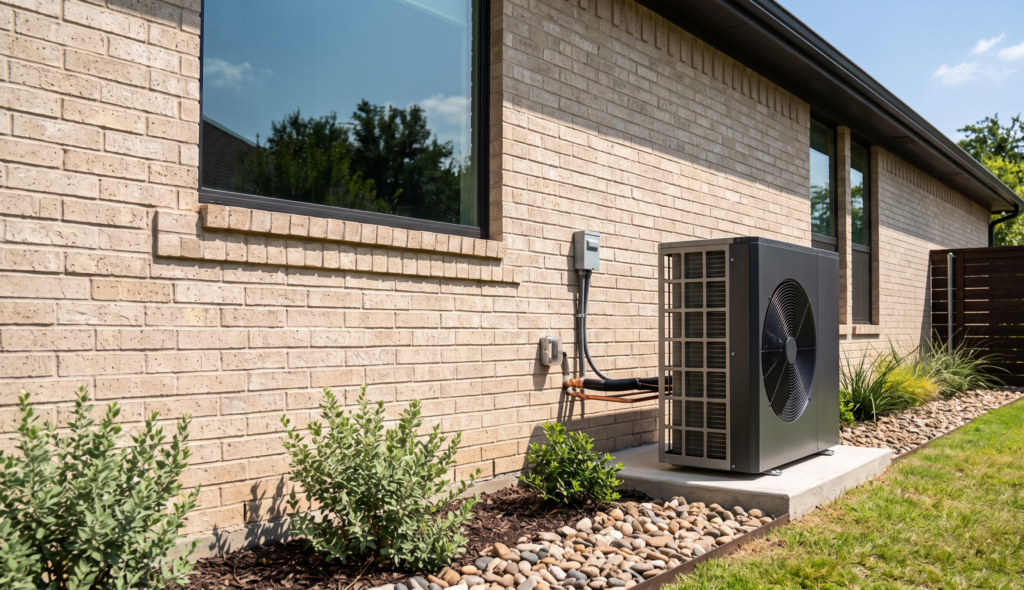
Modern variable-speed HVAC systems use inverter-driven compressors that can adjust their operating capacity anywhere from 25% to 100% in tiny, incremental percentages. Instead of shutting off, an inverter system scales down to a low, quiet hum once your home reaches its target temperature. By running continuously at a lower threshold, the system moves air across the evaporator coil at a steady, controlled pace. This extended runtime allows the system to pull massive quantities of water vapor out of your air without over-cooling the rooms, maintaining an exact dew point and keeping indoor relative humidity at a perfect 45% to 50%.
How Does Better HVAC Efficiency Protect Your Solar and Battery Setup? The Clean Energy Connection
How Does Variable-Speed Technology Eliminate The Startup Surge?
When a traditional single-stage compressor turns on, it requires a massive burst of electrical current, known as Locked Rotor Amps (LRA). This startup surge can demand up to five times the running current of the system, creating a massive spike in your household electrical demand. For homeowners utilizing clean energy infrastructure, this surge places immense stress on their system. Variable-speed inverter systems eliminate this problem entirely by utilizing a soft-start mechanism. The compressor ramps up gradually from zero miles per hour, drawing a smooth, predictable current that never spikes your electrical load.
Why Do Inverter Systems Stretch Your Battery Reserve Hours Overnight?
During a summer power outage or during nighttime peak hours, every watt of battery storage counts. Because variable-speed units run continuously at ultra-low capacities (often drawing less power than a few standard lightbulbs once the home is cooled), they maximize the efficiency of residential energy storage. A smooth, low current prevents your battery backup system from being drained by sudden, high-amp compressor starts. By avoiding the punishing cycles of legacy hardware, an inverter-driven system allows your battery reserve hours to stretch significantly further overnight, ensuring your family stays cool and protected when the utility grid fails.
Why Do High-Efficiency Heat Pumps Reduce Your Overall Solar Panel Count?
Upgrading your home configuration to high-efficiency heat pumps is the ultimate first step before sizing a residential solar array. Because variable-speed heat pumps provide both heating and cooling at a fraction of the energy used by standard equipment, they lower your baseline household electrical consumption by roughly 30%. When you lower your total energy demand first, you do not need to buy a massive, oversized solar panel system to cover a wasteful AC unit. Investing in premium HVAC efficiency directly saves you thousands of dollars on the total solar panel and battery count required to achieve true home energy independence.
Which System Types Are Built To Withstand Sustained DFW Heatwaves? Local Climate Standards
How Do Texas-Tested Systems Survive Sustained 100°F+ Temperatures?
The Dallas-Fort Worth metroplex presents a brutal operational environment for cooling equipment, characterized by weeks of sustained triple-digit temperatures and high Gulf moisture. Standard builder-grade equipment often fails under these conditions because its capacity drops sharply as outdoor temperatures climb past 95°F. Modern, high-tier inverter systems are engineered specifically with enhanced condensers and smart thermal management. These systems maintain their cooling capacity even when outdoor ambient temperatures soar well past 100°F, ensuring your indoor spaces remain safe and comfortable during the peak of summer.
How Do The Financial Profiles of Traditional Units Compare To Modern Heat Pumps?
To understand the financial impact of variable-speed technology, it helps to codify the operational definitions and performance metrics of these competing systems:
| Performance Metric | Traditional Single-Stage Systems | Modern Variable-Speed Heat Pumps |
| Compressor Operational Speed | Fixed at 100% capacity only | Modulating from 25% to 100% capacity |
| Relative Humidity Control | Poor (Frequent short-cycling leaves moisture) | Excellent (Continuous low-speed extraction) |
| Electrical Startup Current | High surge (Stresses grid and battery) | Soft-start (Zero current spikes) |
| Average Electricity Reduction | 0% Baseline | Up to 30% savings on cooling bills |
While a legacy system keeps you locked into unpredictable, skyrocketing electric bills, a variable-speed unit pays for itself through steady, compounding monthly utility reductions.
Why Do You Need a Thermal Evaluation Before an HVAC System Installation in North Texas?
Before rushing into an HVAC system installation in North Texas, it is vital to establish your property’s precise thermal boundaries. Installing a variable-speed system without examining your home’s ductwork, insulation, and air infiltration limits can lead to improper system sizing. A comprehensive home energy audit establishes your baseline energy loss, ensuring that your new inverter system is matched perfectly to your home’s actual heat load. This holistic sequence guarantees that your equipment operates at peak optimization, paving the way for smooth, long-term efficiency upgrades.
How to Take Control of Your Home Energy System
Achieving true comfort and energy self-reliance in Texas requires looking at your home as an interconnected ecosystem. From the quality of your roof to the efficiency of your air conditioner, every component dictates how much power you consume and how much money stays in your bank account.
Texas Solar Professional provides custom, high-efficiency home upgrades designed to break your dependency on high utility bills and an unreliable electrical grid. Our in-house, W-2 certified technical crews specialize in delivering premium variable-speed Daikin HVAC installations alongside advanced solar and battery integration. We eliminate high-pressure sales tactics and commission-driven pitches, working directly with you to design a transparent, cost-effective energy strategy tailored for your home.
Are you ready to see how much you can save by pairing variable-speed climate technology with independent power generation? Contact Texas Solar Professional today to request your free, no-pressure home evaluation and system estimate.
Frequently Asked Questions
Q. How do variable-speed HVAC systems save money if they run continuously?
- Continuous operation at a low speed uses significantly less power than a system constantly turning on and off at 100% capacity. It maintains your home’s temperature smoothly, eliminating the costly electrical spikes caused by traditional single-stage compressor startups.
Q. Can a variable-speed heat pump replace both my furnace and air conditioner in DFW?
- Yes. High-efficiency heat pumps deliver precise cooling during hot summer months and reverse the process to provide highly efficient heating during winter freezes. They eliminate the need for a separate gas furnace while substantially reducing your seasonal energy footprint.
Q. Why is indoor humidity management so critical for overall home comfort?
- High indoor humidity stops your body’s natural sweating process, making 75°F air feel like 80°F. Keeping your relative humidity between 45% and 50% allows your body to cool itself efficiently, letting you set your thermostat higher while staying completely comfortable.