
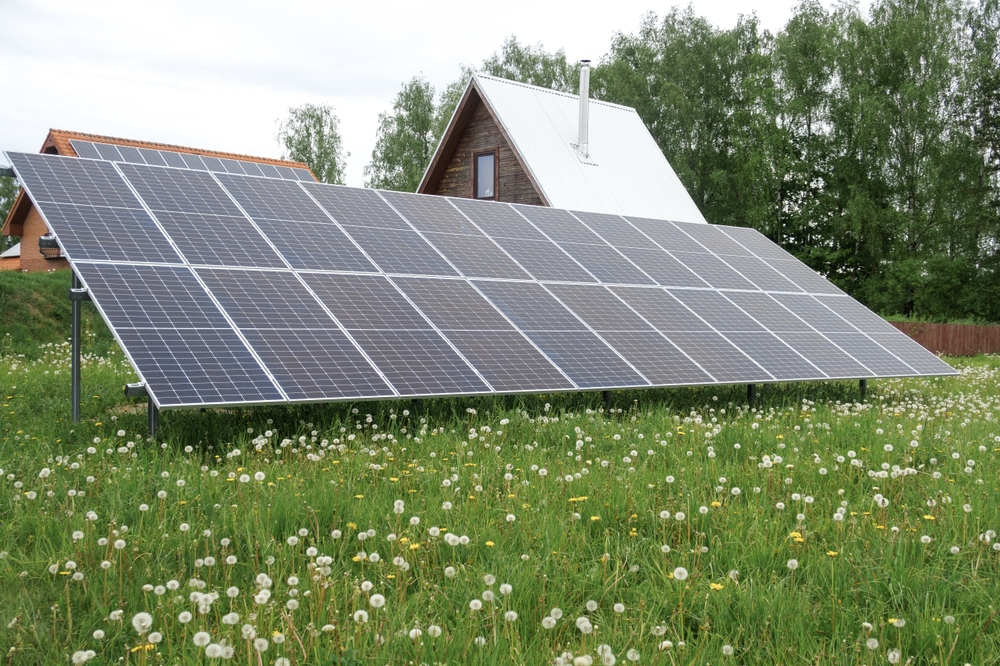
Most homeowners in densely packed cities don’t get to ask this question. Their roof is the only option. But in North Texas, where lots run large and rural properties stretch for acres, many homeowners have a genuine choice between putting panels on their roof or planting them in the ground. That choice matters. The right answer depends on your land, your roof, your budget, and what you want out of the system long-term.
At Texas Solar Professional, we install both. Here’s what we’ve learned about how each one performs in the real world across Dallas, Fort Worth, and the surrounding counties.
Roof Mount Solar: The Traditional Choice
Roof-mounted solar is the most common setup for a reason. It uses space that’s already there. No additional footprint on your property. No disruption to your yard, your driveway, or your sightlines. For most suburban DFW homeowners with a standard lot, a roof mount is the straightforward starting point.
Cost is a major factor here. Roof mounts use your existing structure as the foundation. The racking attaches directly to your rafters, the wiring runs through your attic, and the installation is relatively streamlined. That lower labor complexity typically makes roof mounts less expensive upfront than a comparable ground-mounted system.
That said, your roof has to be ready for it. Age is the first thing we check. If your roof is more than 15 years old, it may need to be replaced before or shortly after solar goes on. Removing and reinstalling panels for a roof replacement later adds cost and hassle. Better to know that going in.
We also look at orientation. South-facing rooflines catch the most Texas sun across the full day, and they’re ideal for residential solar panel installation in Texas. East or west-facing sections can still work, but they produce less than an optimally angled south-facing array.
Shading is another honest conversation. A single large tree can cut the output of several panels significantly, especially in the afternoon. Chimneys, dormers, and roof vents all create partial shade that affects production. We walk every roof before designing a system. If shading is heavy or the roof pitch is far from ideal, a ground mount may simply perform better regardless of cost.
Ground Mount Solar: The Powerhouse for Larger Properties
Ground-mounted systems have one advantage that’s hard to argue with: you control the angle. A roof gives you whatever pitch the builder decided on, pointed wherever the house happens to face. A ground mount lets us set panels at the exact tilt and orientation that captures the most sunlight across a Texas sky. For many properties, that means more production from the same number of panels.
Texas heat also works differently with ground mounts. Roof-mounted panels absorb heat from both the sun above and the hot roofing material below. That heat build-up actually reduces electrical output, a phenomenon called the temperature coefficient effect. Ground-mounted panels have open air circulating underneath them. They stay cooler, and cooler panels produce more electricity. It’s a quiet efficiency advantage that adds up over a full Texas summer.
Maintenance is simpler, too. Cleaning panels, checking connections, and handling any repairs are all far easier when the array is standing at chest height in your yard rather than 20 feet up on a steep pitch. No ladders. No harnesses. Just walk up and take care of it.
One cost that surprises homeowners: trenching. The electrical conduit connecting your ground-mounted array to your home has to run underground. Depending on how far the array sits from your house, trenching can add real dollars to the project.
Permits and setback rules are another consideration. Local municipalities and counties across North Texas handle ground mount permits differently from roof systems. Most jurisdictions require ground arrays to sit a minimum distance from property lines, fences, and structures. In some areas, HOA rules apply as well.
We handle permitting on every job we do, but it’s worth knowing that the approval process for a ground mount can take longer than a roof install in certain counties.
Comparing the ROI: Upfront Costs vs. Long-Term Yield
Ground mounts cost more to install. The racking system, concrete footings, and trenching all add labor and materials that a roof mount doesn’t require. For an equivalent system size, expect ground mounts to run 10 to 20 percent higher in total installation cost.
The counterargument is production. A perfectly angled ground array in a well-sited location can outproduce a suboptimally oriented roof mount by a meaningful margin over time. If your roof is partially shaded, east-facing, or steeply pitched in the wrong direction, the ground mount may generate enough extra electricity over its lifetime to more than cover the upfront cost difference.
Property value is a factor that comes up with our clients across DFW. Both roof and ground mount systems generally add value to Texas properties. Roof mounts tend to be more familiar to appraisers and buyers, partly because they’re more common.
Ground mounts on rural and larger suburban properties are well understood in the market and often viewed favorably, particularly as EV adoption grows and buyers look for homes with room to expand energy capacity.
Which Is Right for You? A Decision Framework
There’s no single answer that fits every property. But these four questions get most homeowners to the right decision.
How much usable roof do you have?
If your roof is large, south-facing, unshaded, and in good condition, a roof mount is likely the most cost-effective path. Solar panel roof mount systems work well when the structure supports them.
What shape is your roof in?
A roof that’s 12 to 15 years old may need replacement within the next few years, regardless of solar. In that case, either replace the roof and add solar together, or install a ground mount and sidestep the issue entirely.
Do you have open land?
If your property has an unshaded area with good southern exposure away from the house, a ground-mounted system can deliver production gains that a compromised roofline can’t. Homesteads and rural properties north of Fort Worth are particularly good candidates.
Are you planning to expand? Adding panels to a ground mount is far simpler than expanding a roof system. If you anticipate adding an EV charger, a pool pump, or a home battery in the next few years, a ground mount gives you room to grow without a redesign.
For most suburban DFW homeowners with standard lots and solid roofs, a solar panel installation in Texas will start on the roof. For rural property owners, homesteaders, and anyone with a compromised or complicated roofline, a ground mount often delivers better performance at a cost that makes sense over time.
Ground Mount or Roof, Texas Solar Professional Has You Covered
Both systems work well in Texas. The question is which one works best for your specific property. That’s why every project we take on at Texas Solar Professional starts with a site visit and an honest conversation about your roof, your land, and your goals.
If you’re ready to make the move to solar, we’re ready to help you make the right choice for your property. Contact us to schedule a site assessment and find out which setup gives you the most for your investment.