
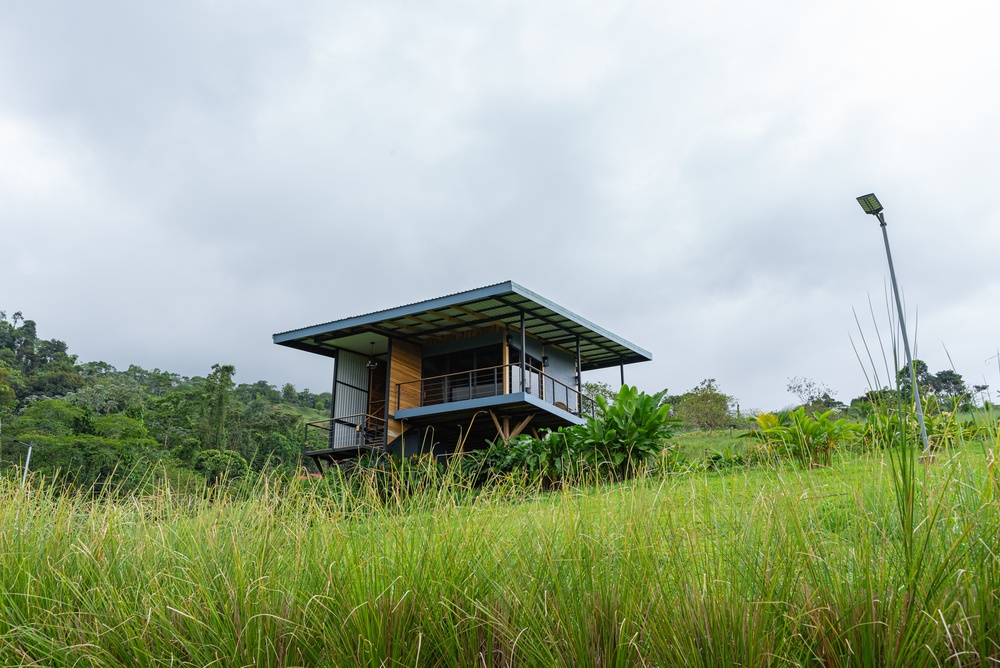
If you’re ready to say goodbye to the busy city life and take it easy with your family on your own, the off-grid lifestyle may be your goal.
When we say off-grid we aren’t thinking of outhouses and a handpump. Off-grid doesn’t have to be about inconvenience. With the right system, you can keep your AC running and laundry spinning without being strapped down to a utility company.
True energy independence in Texas is no longer a fringe idea. It’s a real, achievable goal for rural homeowners, homesteaders, and ranch owners who want modern comfort on their own terms.
At Texas Solar Professional, we’ve designed and installed these systems across North Texas. We’ve seen what works and what fails. Let’s explore the practical side of going off-grid, specifically how to handle the appliances that use the most power.
The Heavy Hitters: Identifying High-Load Appliances
Not every appliance is created equal. A few of them can strain your system fast if you’re not paying attention.
High-load appliances are anything that draws a large amount of power consistently. HVAC systems, electric water heaters, well pumps, and EV chargers all fall into this category. A central AC unit, for example, can pull 3,000 to 5,000 watts while running. That’s a major draw on your battery bank.
Smart off-grid planning starts with a “load triage” list. Some things need to run around the clock: your refrigerator, your internet router, your lights, and your well pressure tank. Others can wait for daylight hours when your solar panels are actively generating power. Dishwashers, washing machines, and water heaters are perfect candidates for midday operation. Learning which loads belong in which category is the first real step toward stable off-grid life.
Cooling the Texas Heat: Off-Grid HVAC Strategies
Cooling a Texas home in July is non-negotiable. Summer heat around here is dangerous. That puts HVAC at the center of every off-grid system design we do.
Traditional central AC units run at 100% capacity whenever they turn on. They’re on or off, nothing in between. For off-grid use, that’s a problem. A system that slams on at full power, runs hard, then shuts off puts a heavy, unpredictable load on your batteries.
Variable-speed heat pumps solve this. Units like those in Daikin’s lineup use inverter-driven compressors that ramp up or down based on what your home actually needs. Instead of blasting at full power, the unit runs continuously at a lower output. This dramatically cuts the power draw and reduces the startup surge that kills inverters. We install variable-speed heat pumps on off-grid builds specifically because they play well with battery systems.
Managing the “Big Three”: Well Pumps, Laundry, and Cooking
Water Independence
A standard submersible well pump can draw 750 to 1,500 watts while running. That’s manageable. The bigger issue is the startup surge and the fact that you can’t always predict when someone will open a faucet.
The cleanest solution is a gravity storage tank. Your solar-powered pump fills a large tank during the day. Gravity then delivers water pressure to your home, often without the pump running at all. This separates water availability from electrical demand. You’re not at the mercy of whether the pump can start when your batteries are low at midnight.
The Midday Rule
Running the dishwasher and washing machine at noon sounds like a strange rule. It’s actually one of the smartest habits an off-grid homeowner can build. At noon, your solar panels are producing at or near full capacity. Running heavy loads then pulls power directly from the panels, not from your batteries. This leaves them fuller longer and lasting more charging cycles over the years.
The Role of Smart Technology in Off-Grid Autonomy
Knowing what your system is doing in real time changes everything. It turns energy management from guesswork into a simple daily habit.
Smart panels like the Span panel sit between your solar system, your batteries, and your home’s circuits. They track how much power each circuit is using, right now, all the time. You can see from your phone exactly which appliances are running and how much energy they’re pulling. That visibility alone helps you make better decisions.
Solar with battery storage in Texas becomes far more effective when paired with this kind of automation. Span and similar systems can be programmed to perform automatic load shedding. When your battery drops to around 20% charge, the system automatically cuts power to non-essential circuits, like a guest room outlet or a decorative outdoor lighting run. The refrigerator, the well pump, and your main living areas stay on. The system protects itself without you having to intervene.
This automation matters most at 2 AM when you’re asleep. No one is checking an app then. A smart panel handles it without waking you up.
Preparing for “Low-Solar” Days
Texas gets a lot of sun. But it also gets weeks of winter cloud cover and the occasional stretch of gray days in spring. A well-designed off-grid system plans for those stretches.
The key concept is “days of autonomy.” How many days can your battery bank power your home without any solar input at all?
For most off-grid homes in North Texas, designing for three to five days of autonomy is a reasonable starting point. That means sizing your solar energy storage system in Texas to cover multiple days of average consumption, not just one. This is where system sizing gets serious. A system that handles a sunny Tuesday in April might collapse by Thursday if clouds roll in.
That’s why we often recommend integrating a standby generator as a backup. Not as the main plan, but as a safety net for extended low-solar events. The generator isn’t running every day. It kicks on when the battery bank drops to a preset level, tops the batteries back up, then shuts off. Most homeowners run their backup generator only a handful of times per year. When they do, it’s quiet, automatic, and brief. The rest of the time, the house runs in silence on solar and stored power. That quiet is something grid-tied homeowners don’t notice until they hear it for the first time on a working off-grid property.
Stay Off-Grid Easily With Texas Solar Professional
Energy independence in Texas is about taking responsibility for your own power. It’s a shift in how you think about electricity. You stop being a passive consumer and start being an active manager. The tools to do it right exist today, and they work..
If you’re planning an off-grid build in rural North Texas, the most important first step is a proper energy audit from Texas Solar Professional. Our team will know what you’ll need and properly size a system. That’s where we always start, and it’s the only way to build something that actually works when the grid is nowhere in sight.